Emergency Lockouts · London
Business Lockout Service
Minus eighteen with a wind, and the exterior cylinder on the shop door has frozen solid overnight after yesterday's slush. The key goes in halfway and stops.
Call now · open 24/7(226) 777-6122In plain words
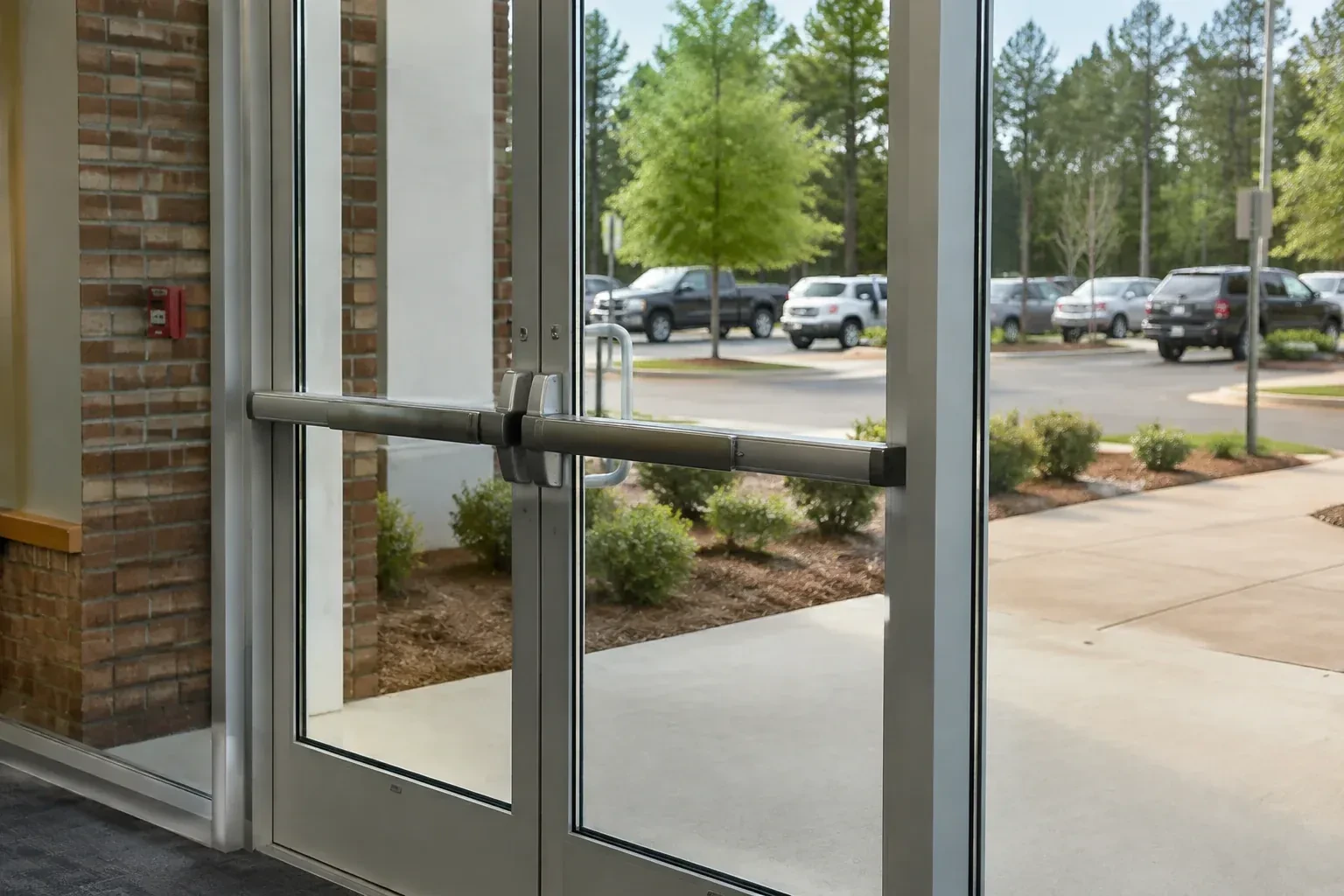
Heavy commercial doors move, and a good share of business lockouts are really door problems. A glass storefront door hangs on pivots or a continuous hinge that wear with thousands of openings a week, and once the door drops a few millimetres the hookbolt or latch binds against its strike. A hydraulic closer that has stiffened in the cold or lost its adjustment leaves a door that never latched properly the night before. Part of a lockout visit is reading the door: lifting it back into line, adjusting the strike and closer, and making sure the lock is asked to do only what a lock should do.
How the visit goesYou signed the lease on the unit last week and the landlord handed over possession, but the previous tenant's locks are still on both doors and no keys came with them. Your fixtures arrive tomorrow and the doors will not open.
Business Lockout Service · London
How the visit goes
- 1
How the door hangs and closes
Commercial doors are heavy and busy, so the locksmith reads the door as carefully as the lock. A glass door is checked at its pivots or continuous hinge for drop and play, and at the threshold for scrape marks that show it has sagged. The closer is checked for a slow or stiff sweep that leaves the door short of the strike. The gap along the lock edge tells whether the bolt is entering its pocket square or catching its lip. A hand on the door while the key is turned often reveals that the bolt is bound rather than the cylinder failed, which changes the fix from lock work to lifting and adjusting the door.
- 2
Lever locksets and removable cores
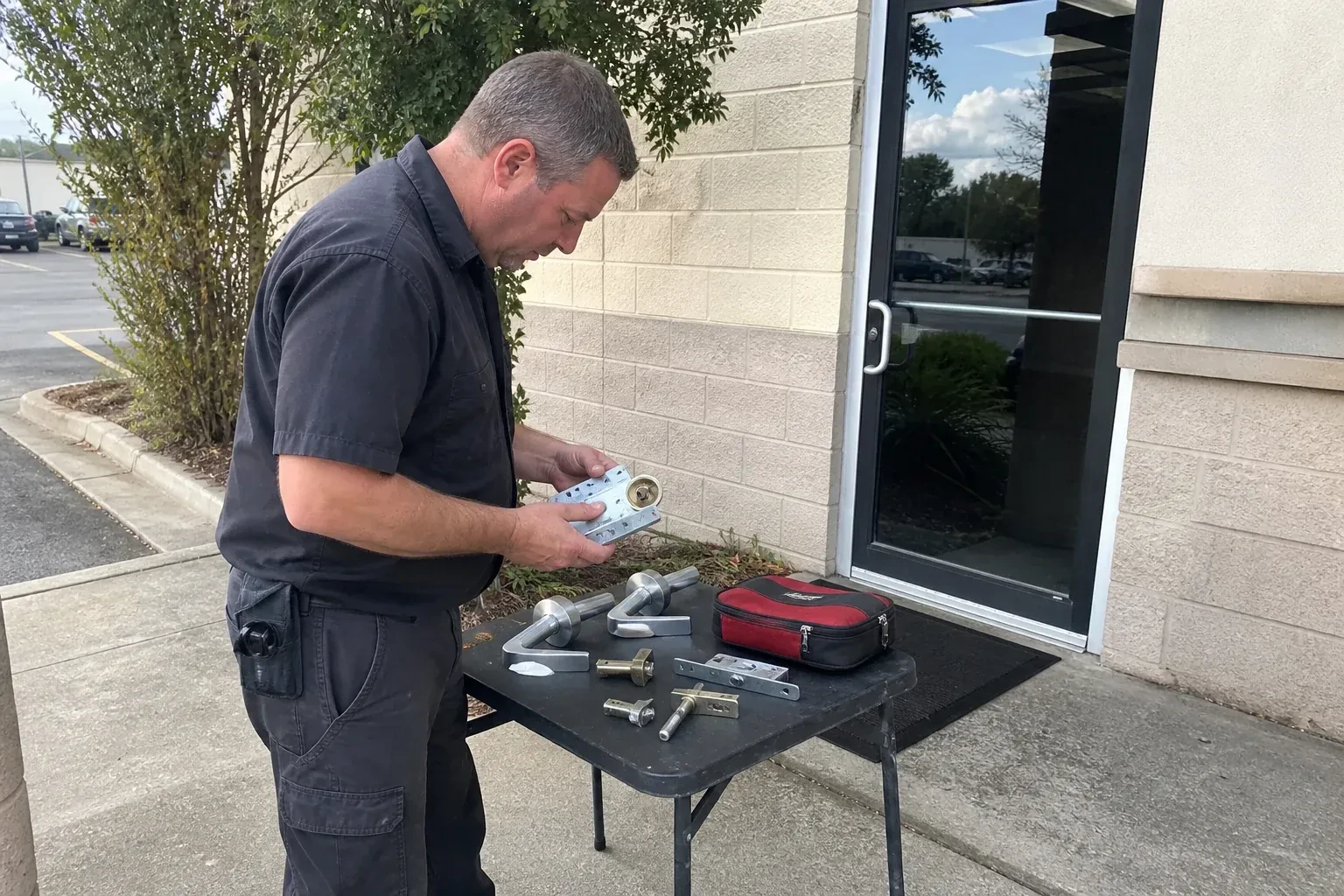
Office and back-of-house doors usually carry a cylindrical lever lockset in a storeroom function, locked from the outside at all times with the lever free inside. The latch has a deadlocking plunger, so the locksmith picks the cylinder in the lever face rather than reaching for a shim. In buildings with interchangeable cores, a control key held by the property manager or head office lets the small figure-eight core slide out and a temporary core go in, which is the gentlest opening there is. Where picking is not straightforward and no control key is available, the locksmith works through the lockset's own key-operated release path, then confirms the spring cage that keeps the lever level is seated correctly.
- 3
Doors that open for the day and lock at night
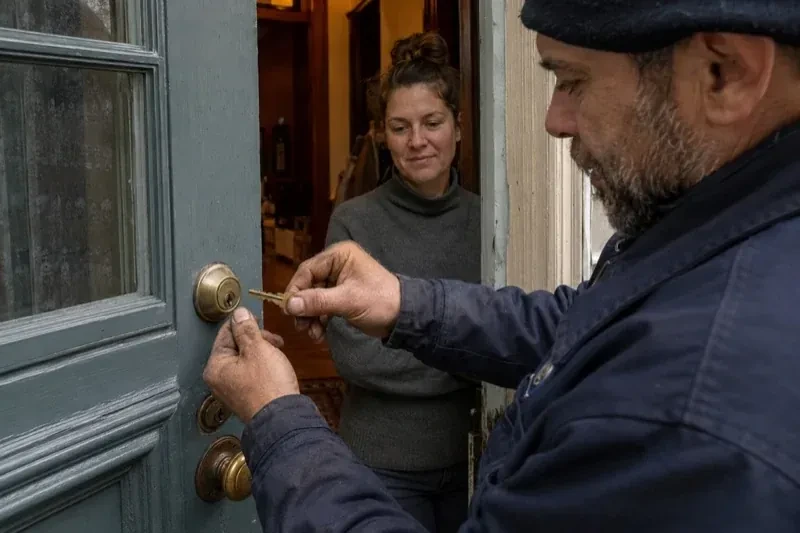
The visit ends with every door that was worked on cycled from both sides, open and closed, with the customer's own key. A hookbolt is watched to seat fully in its strike, a deadlatch is checked to catch on its own when the door swings shut under the closer, and a lever is tested to stay locked from the corridor while turning freely inside. Whoever locks up that evening is shown what was done, so the closing routine holds no surprises. Any hardware replaced is demonstrated and the packaging and old parts left with you, and the door is locked once more with your key before the van leaves.
In the van
- Storefront deadlock and deadlatch bodies
- Storefront deadlatch and hookbolt bypass tools
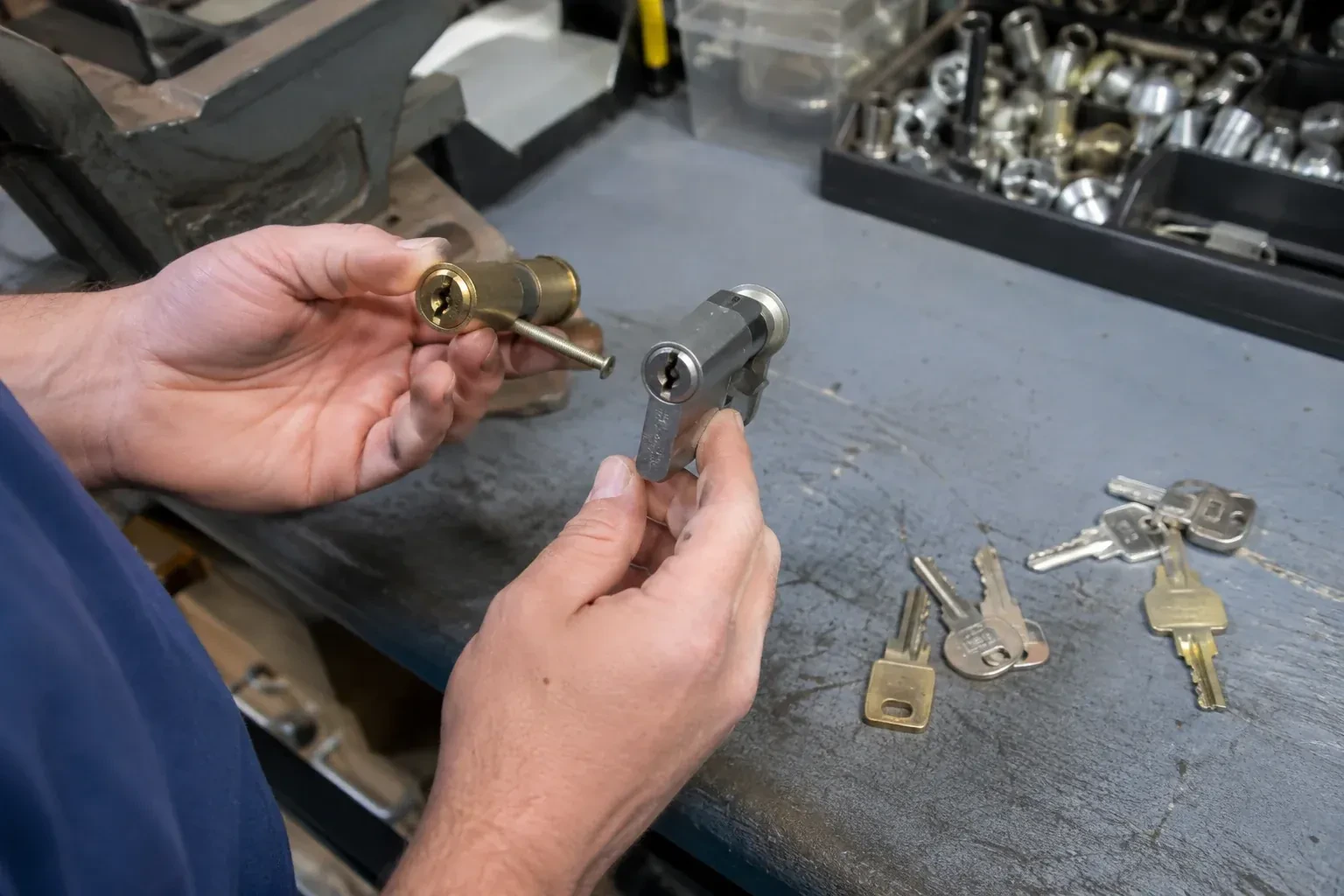
- Replacement mortise and rim cylinders
- Broken key extractors
- Lock de-icer and dry PTFE lubricant
What affects the quote
- 1
Damage from earlier attempts
A paddle bent by a pry bar, a stile scratched by a screwdriver or a cylinder wrenched by pliers may need repair as well as opening, and the locksmith points out what was already there before quoting it.
- 2
Door, pivot and closer adjustment
When the lockout was really a dropped door or a tired closer, lifting the door, adjusting pivots or a continuous hinge, moving the strike and resetting the closer are quoted as their own item beside the opening.
- 3
Master key system changes
Where the door belongs to a building-wide master key system, changing it means planning with the property manager and pinning cylinders so both your key and the building key still work, which is more careful work than a single rekey.
Same fees day, night or weekend.
Business Lockout Service: questions
The key snapped off inside the lock. What happens now?
The broken blade is removed with extractors that grip it and draw it out toward the face, then the cylinder is opened normally. Keys rarely break in a healthy lock, so the cylinder is cleaned, the cam behind it checked for stiffness, and a dry lubricant applied. A new key is cut from the code or from the two pieces rather than from a worn spare, since a tired copy is usually what broke.
We have lost a master key. Is that different from losing an ordinary key?
Yes, because a master key opens every lock in its group, so one missing key touches many doors. The response is planned rather than rushed: the locksmith maps which cylinders the key operated, works with the property manager if the system is building-wide, and re-pins or swaps cores across the group so a new master takes over. Manufacturers' guidance on key control treats retrieving and tracking master keys as the foundation of the whole system.
Will we get something in writing afterwards?
Yes. The visit closes with a written account of which door was opened and how, the condition the hardware was in, anything replaced, the number of keys cut and who received them. Landlords ask for it when locks on a unit change, insurers after a loss, and franchise head offices as a matter of course. Keep it with the lease; it also tells the next locksmith exactly what is on your doors.
Lockout Services
 EmergencyHome Lockout ServiceThe key slides in and turns all the way round, but the bolt stays put.
 EmergencyBroken Key ExtractionThe padlock on the shed has been stiff all summer.
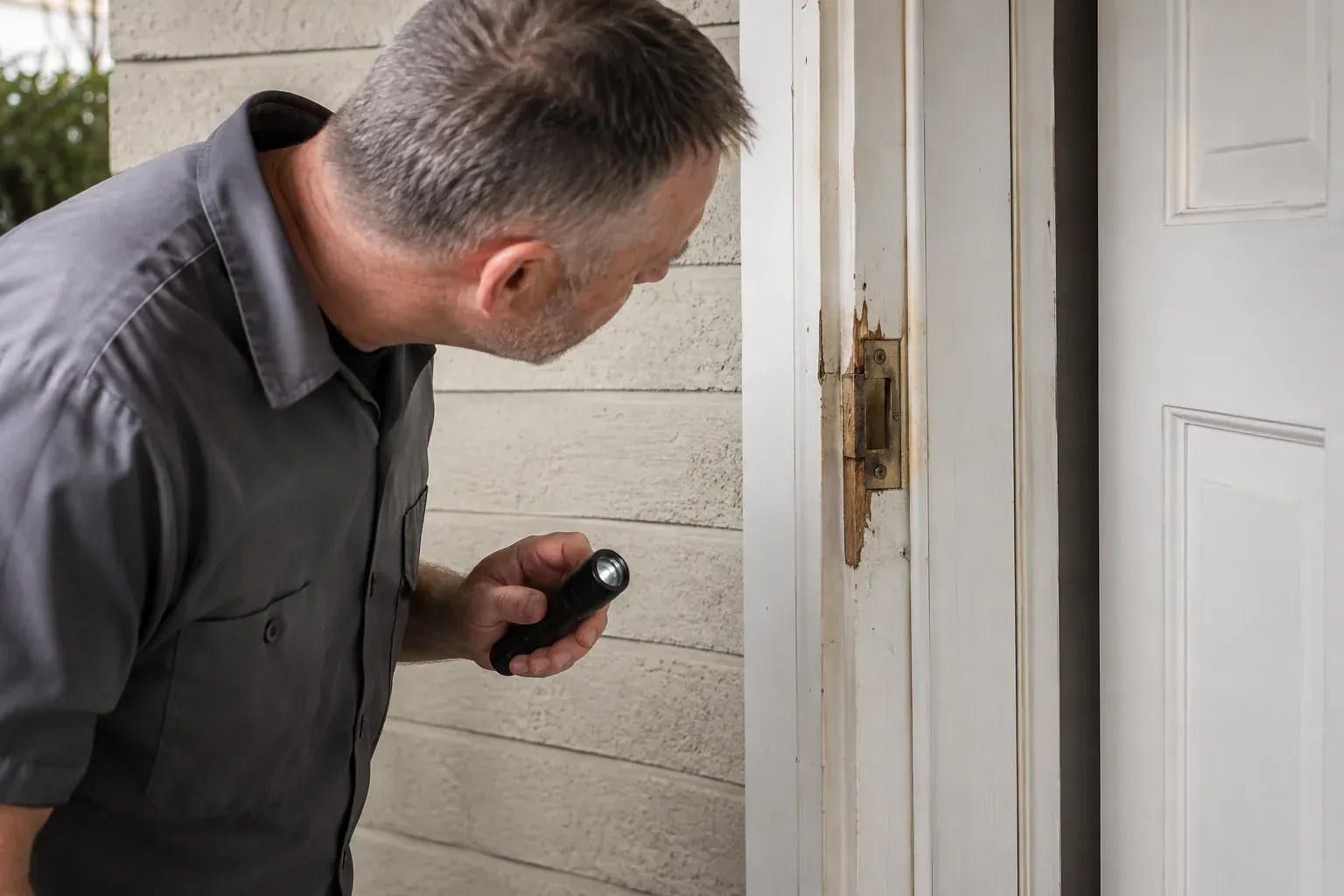 EmergencyBreak-In Damage Lock RepairThey did not get in.
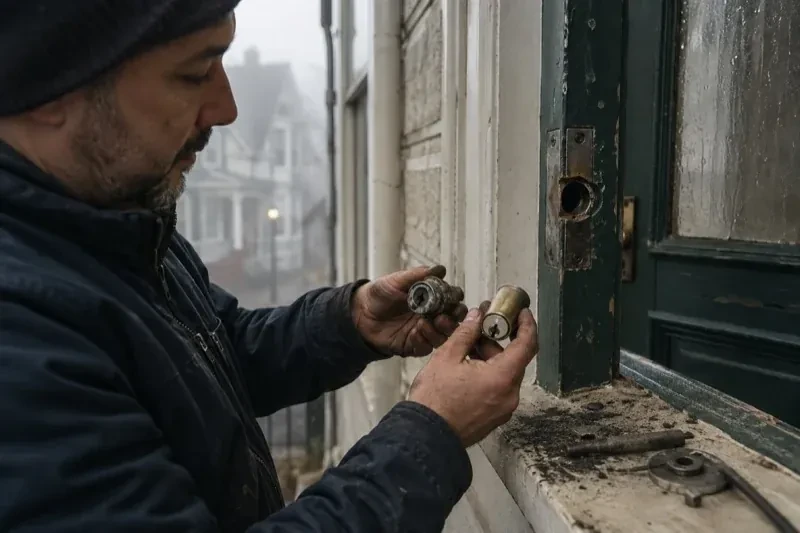 EmergencySeized & Jammed Lock OpeningIt is the coldest morning of the winter and the key goes halfway into the side door and stops.
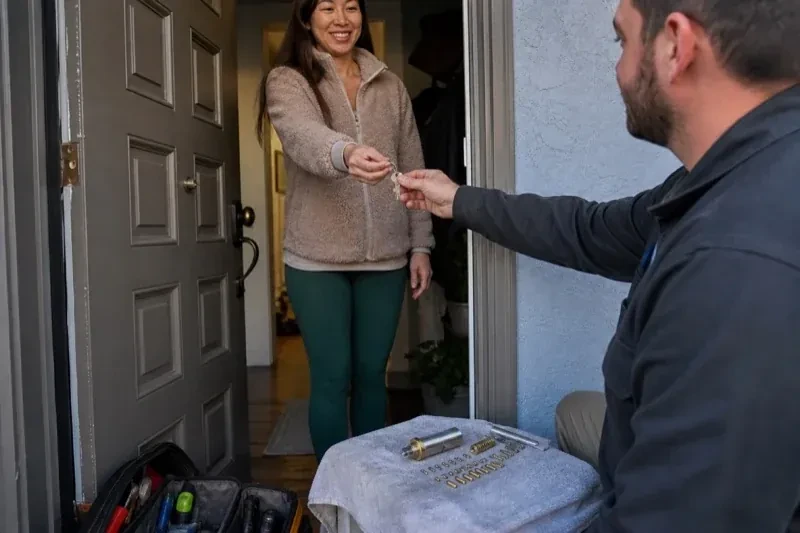 EmergencyLost Keys — Same-Visit RekeyThe keys fell out of a gym bag somewhere between the arena and the parking lot.
Business Lockout Service near you
Middlesex, Ontario
London information
- Town
- London, Middlesex, Ontario
- In business
- 23 years
- Hours
- Open 24/7 · nights, weekends and holidays, same fees
- Phone
- (226) 777-6122
- Visits
- On-site assessment preferred. Request a visit or call.
What the census means at the door
52%
Older homes. About 52% of homes in London were built in 1980 or earlier, according to the 2021 Census.
Period hardware on older homes deserves matching parts, not a mismatched modern set. A locksmith who works among such houses keeps finishes and styles that suit them, so a repaired or replaced lock still looks like it belongs to the door.
49%
A mix of homes. Single-detached houses make up about 49% of homes in London (2021 Census).
Mixed housing means a locksmith sees a bungalow in the morning and a condo tower in the afternoon. The stocked van has house-door deadbolts, suite-door cylinders and the finishes for each, so neither kind of customer waits for a second visit.
Open 24/7
Request a visit
Minus eighteen with a wind, and the exterior cylinder on the shop door has frozen solid overnight after yesterday's slush.
Call now · open 24/7(226) 777-6122- On-site assessment preferred
- Same fees day, night or weekend
- 23 years in business